
Automatic cars have become increasingly popular in recent years, but their history stretches back more than a century. What was once considered a luxury feature found only in expensive vehicles has evolved into a mainstream technology that now dominates car sales in many parts of the world.
The idea of an automatic transmission dates back to the early 1900s. Early inventors recognised that changing gears manually required skill and effort, particularly as motor vehicles became more common. Several designs were experimented with during the first few decades of the twentieth century, but reliability and cost remained significant challenges.
The first commercially successful automatic transmission arrived in 1939 when the American manufacturer General Motors introduced the Hydra-Matic gearbox. Fitted to Oldsmobile models, it allowed drivers to accelerate and brake without using a clutch pedal or manually selecting gears. This was a revolutionary development at the time and quickly attracted attention from motorists looking for a simpler driving experience.
During the 1940s and 1950s, automatic transmissions became increasingly popular in the United States. American roads were often wide and designed for long-distance travel, making automatics particularly appealing. By contrast, manual gearboxes remained the preferred choice in Europe, where smaller cars, fuel efficiency and lower purchase costs were often more important considerations.
As technology improved throughout the 1960s and 1970s, automatic gearboxes became smoother and more reliable. However, they still had a reputation for being less fuel efficient than manual cars. Early automatic transmissions were often heavier and less sophisticated, leading to increased fuel consumption and slower performance.
The 1980s and 1990s saw major advances in transmission technology. Electronic controls began replacing purely mechanical systems, allowing gear changes to become faster, smoother and more efficient. Manufacturers also introduced additional gears, helping engines operate more effectively at different speeds.
One of the biggest developments came with the introduction of continuously variable transmissions (CVTs). Rather than using fixed gears, CVTs could adjust seamlessly through an infinite range of ratios. This helped improve fuel economy and provided a smoother driving experience. Hybrid vehicles, such as the Toyota Prius, helped popularise this technology even further.
The rise of dual clutch transmissions during the 2000s represented another significant step forward. These gearboxes could preselect the next gear before it was needed, resulting in lightning fast gear changes. Initially developed for high performance vehicles, dual clutch systems eventually found their way into many everyday family cars.
In recent years, automatic cars have undergone perhaps their biggest transformation yet. Modern automatics are often more fuel efficient than manual vehicles, reversing a long held assumption. The growth of hybrid and electric vehicles has accelerated this trend, with many electric cars requiring no traditional gearbox at all.
Today, automatic vehicles account for the majority of new car sales in the UK. Advances in technology, increasing traffic congestion and the popularity of hybrid and electric vehicles have all contributed to their rise. What began as an experimental convenience over 100 years ago has become the preferred choice for millions of drivers.
The history of automatic cars is a story of innovation and adaptation. From the early Hydra-Matic systems to today’s advanced transmissions, automatic technology has transformed the way people drive and continues to shape the future of motoring.
2 thoughts on “Anand Manokaran – Automatic Driving Lessons”
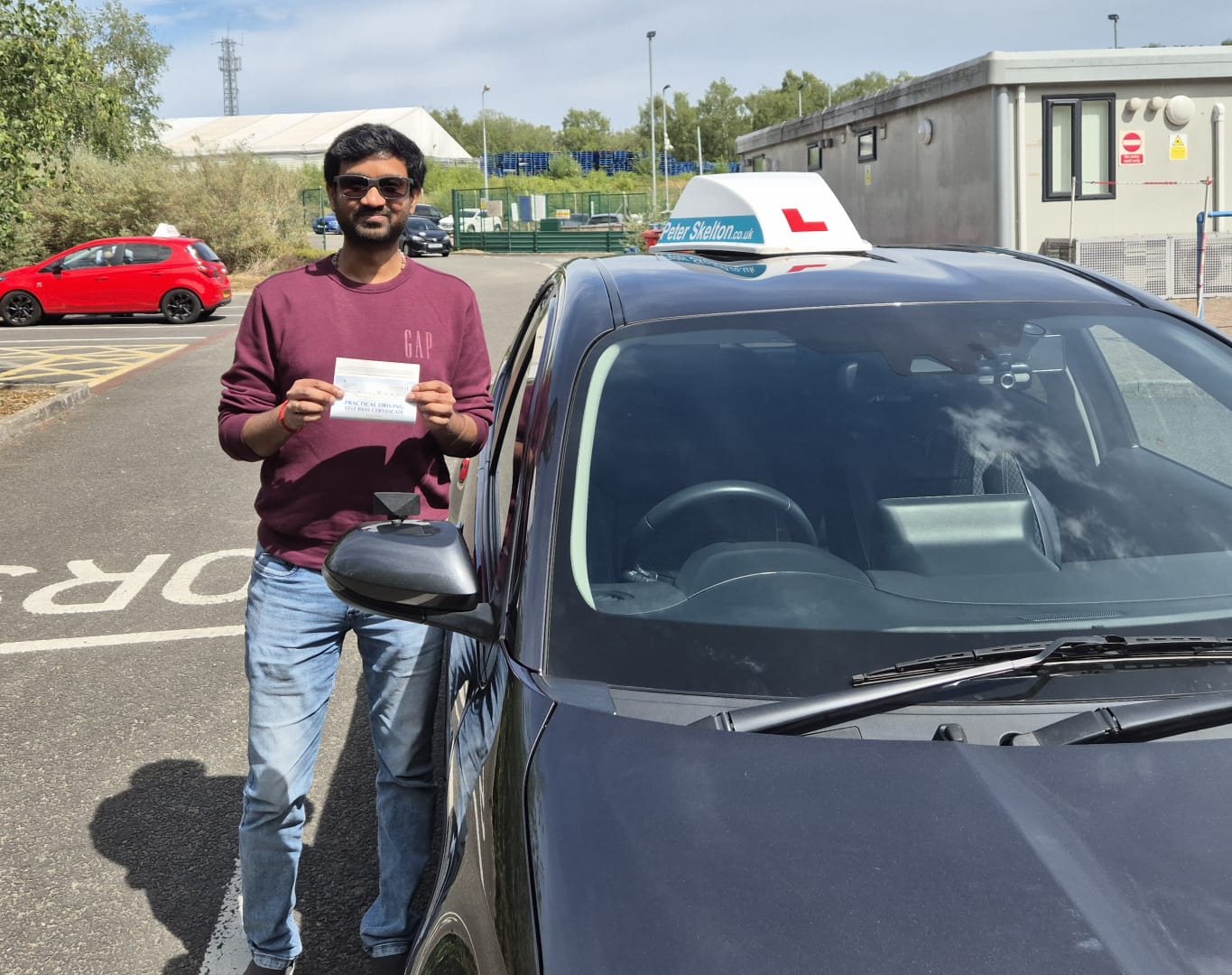
Thank you so much, Tom! I highly recommend Tom as a driving instructor for his exceptional guidance and incredible patience throughout our lessons. He did a fantastic job of teaching me all the basics from scratch and made sure I felt completely confident behind the wheel. Whenever I made an error, he didn’t just correct my mistakes, but actively helped me understand how to improve the areas that mattered most. His calm, supportive approach turned what could have been a stressful experience into a great learning environment. Thank you, Tom, for being such a brilliant teacher and helping me become a safe, capable driver!
Thank you for your comments in regards your experience learning to Drive with Peter Skelton Driving School and particular with your instructor Tom 🙂
Comments are closed.