
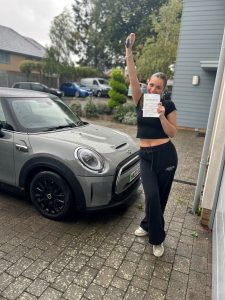
“I just passed my driving test today on my first attempt in heavy rain. Thank you so much for dealing with all my confusion and stress. The confidence now has risen loads from when we first started. Thank you again Peter for the reassurance.”
and from your mum Laura:
“Peter I just want to say thank you as you have been the best driving instructor we could have wished for. So calm and reassuring! Now only a few more years till you teach Amelia 🤣”
Driving in wet conditions is one of the biggest challenges faced by UK motorists, especially given how often rain appears on British roads. Wet weather can drastically reduce visibility, grip, and braking distances, increasing the likelihood of accidents if drivers don’t adjust their behaviour. Understanding how to drive safely in the rain is essential for every road user.
When roads are wet, tyres lose some of their traction, meaning vehicles take longer to stop. Drivers should at least double their normal following distance to allow extra time to react. Gentle acceleration and braking are key. Sudden movements can cause skidding or loss of control, particularly on corners. If your car begins to aquaplane (when tyres ride on a thin film of water), ease off the accelerator and avoid sharp steering until the tyres regain contact with the road surface.
Visibility also becomes an issue in heavy rain. Make sure windscreen wipers and headlights are in good working order, and always use dipped headlights when visibility is poor. Avoid using full beam, as it can reflect off wet surfaces and reduce visibility further.
Puddles can conceal potholes, so it’s best to avoid large standing water where possible. If driving through deep water is unavoidable, proceed slowly and check your brakes afterwards.
Ultimately, the key to staying safe in wet conditions is patience and awareness. Slowing down, maintaining clear visibility, and keeping a safe distance from other vehicles can make all the difference when the rain starts to fall on UK roads.